Know which notes belong
See the scale across the entire neck, so improvising is based on a clear map instead of guesswork.
Essential fretboard knowledge · without the grind
Want to learn a scale? Choose it, see it across the neck, then work through guided tablature from approachable patterns to demanding runs. Every repetition follows a live playhead and a real groove, so building muscle memory stops feeling like homework.
Scales are the vocabulary behind melody, improvisation, phrasing, and confident movement across the neck. The important part is also the tedious part: enough clean repetitions for the notes and movements to become automatic. We make those repetitions easier to understand and far more enjoyable to play.
See the scale across the entire neck, so improvising is based on a clear map instead of guesswork.
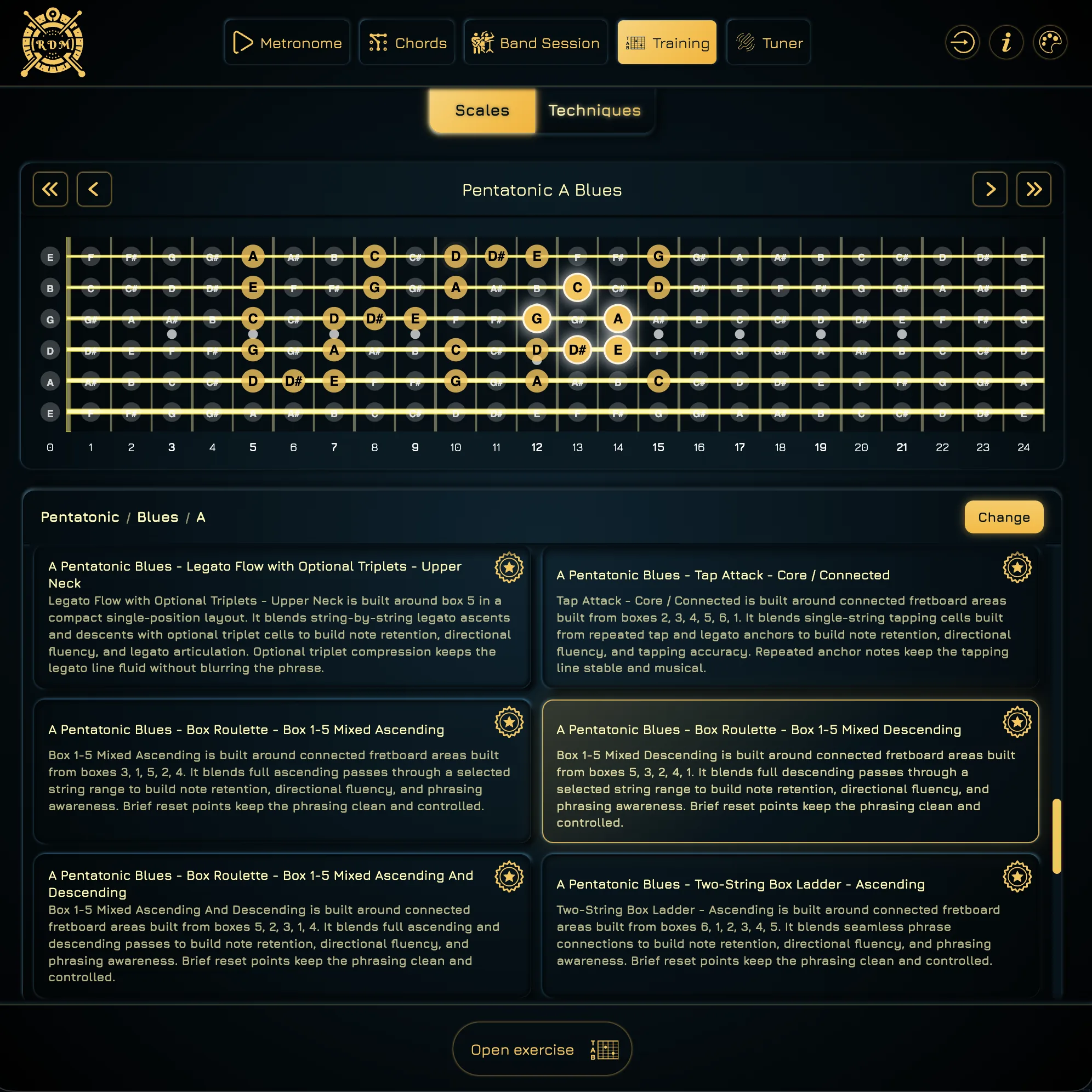
Work through exercises of different difficulty instead of running one box up and down until practice goes numb.
Follow the tab and playhead against a real groove adapted to the exercise, or choose any preset you already enjoy.
Real screens, real controls, and the exact path you use when you open this part of the studio.
Seeing the notes matters, but playing them is what builds fluency. Choose a matching exercise directly from the fretboard instead of collecting another diagram you never turn into music.
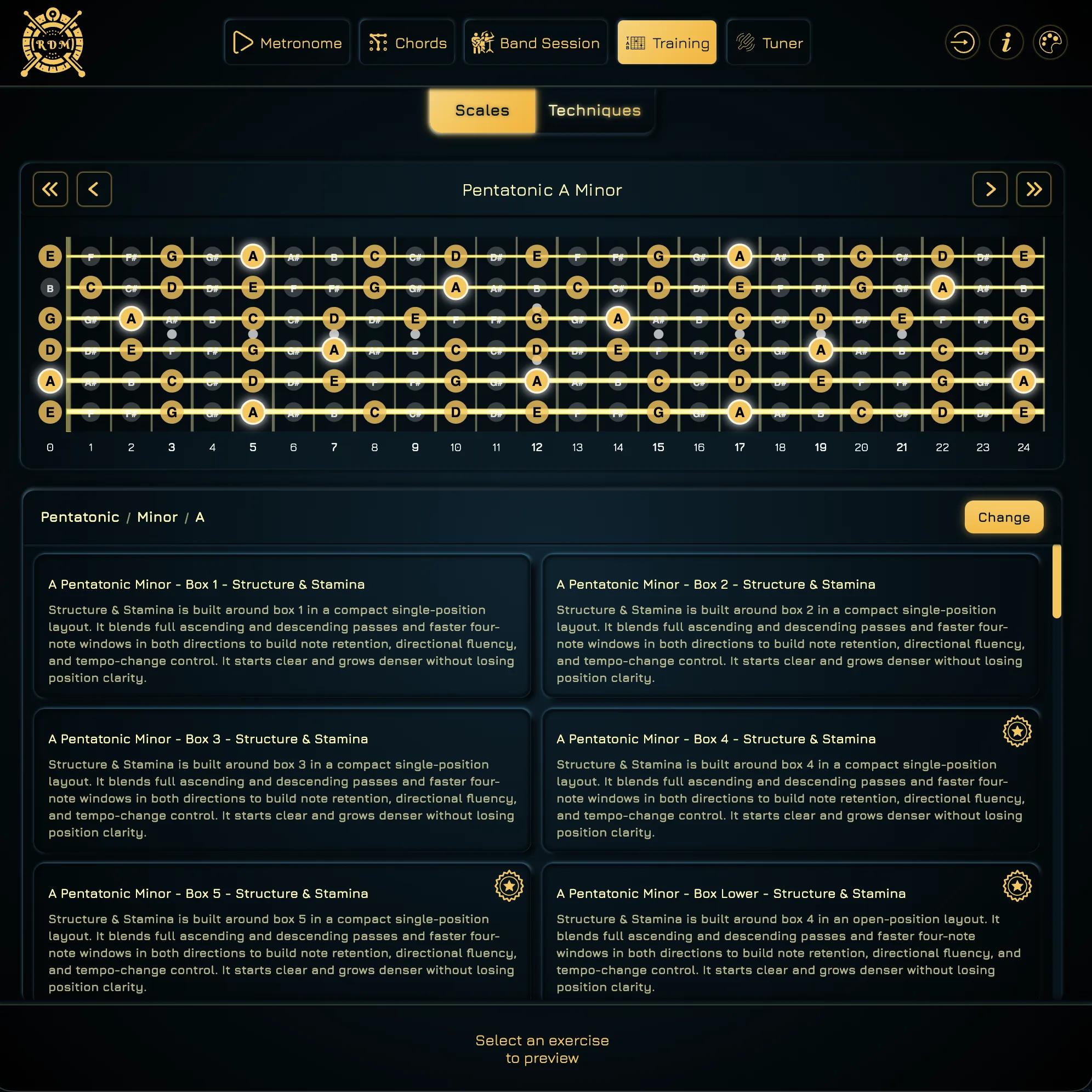
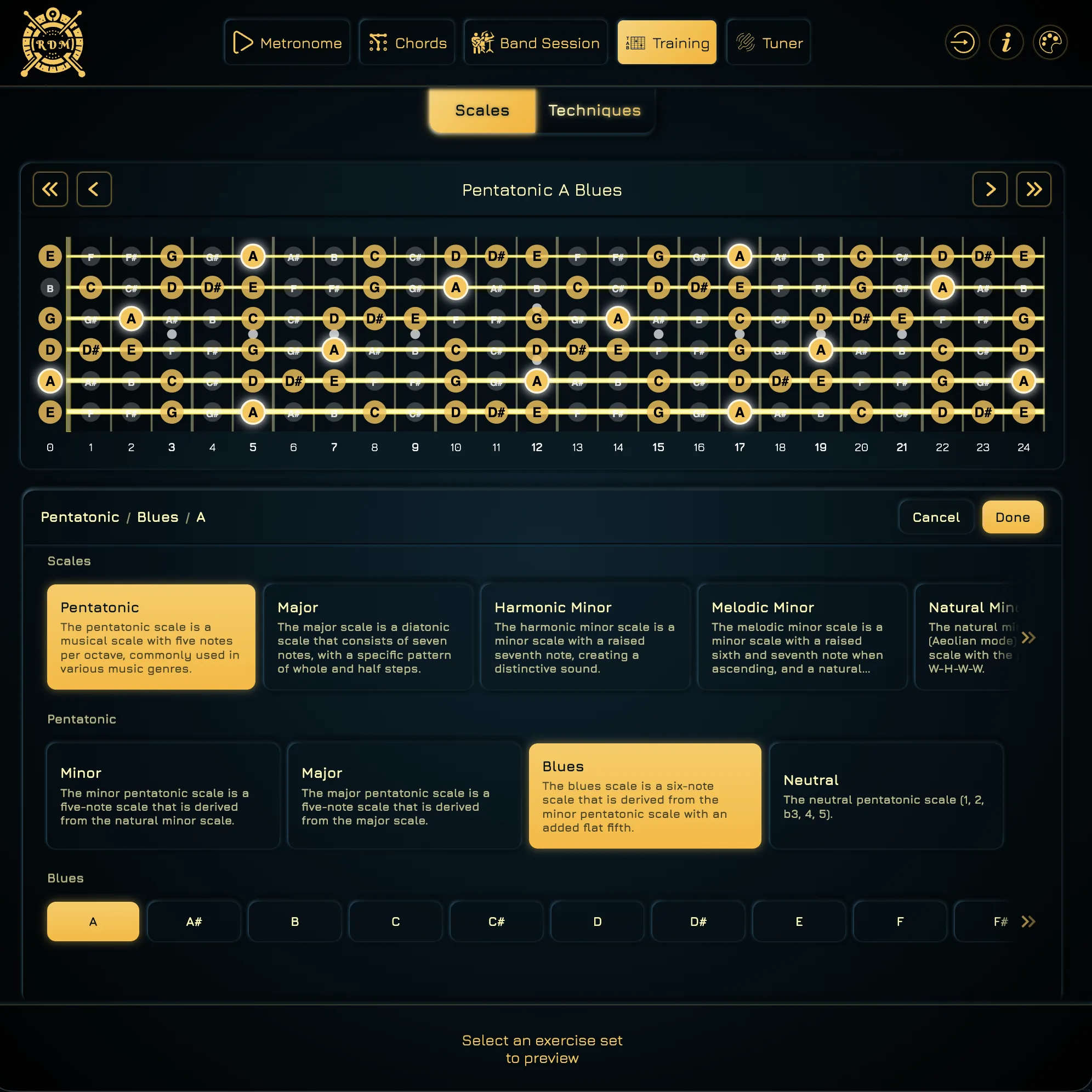
Start with a root, pentatonic, major or minor family, or a mode. The scale you need is ready in one place, without hunting through disconnected charts and videos.
Choose from approachable patterns, position changes, sequences, and more demanding coordination drills. You learn the same scale through several useful movements instead of one tired box shape.
The live playhead, tablature, groove, and progressive tempo controls stay on one screen. You still do the repetitions scale learning requires, but they sound and feel like playing.
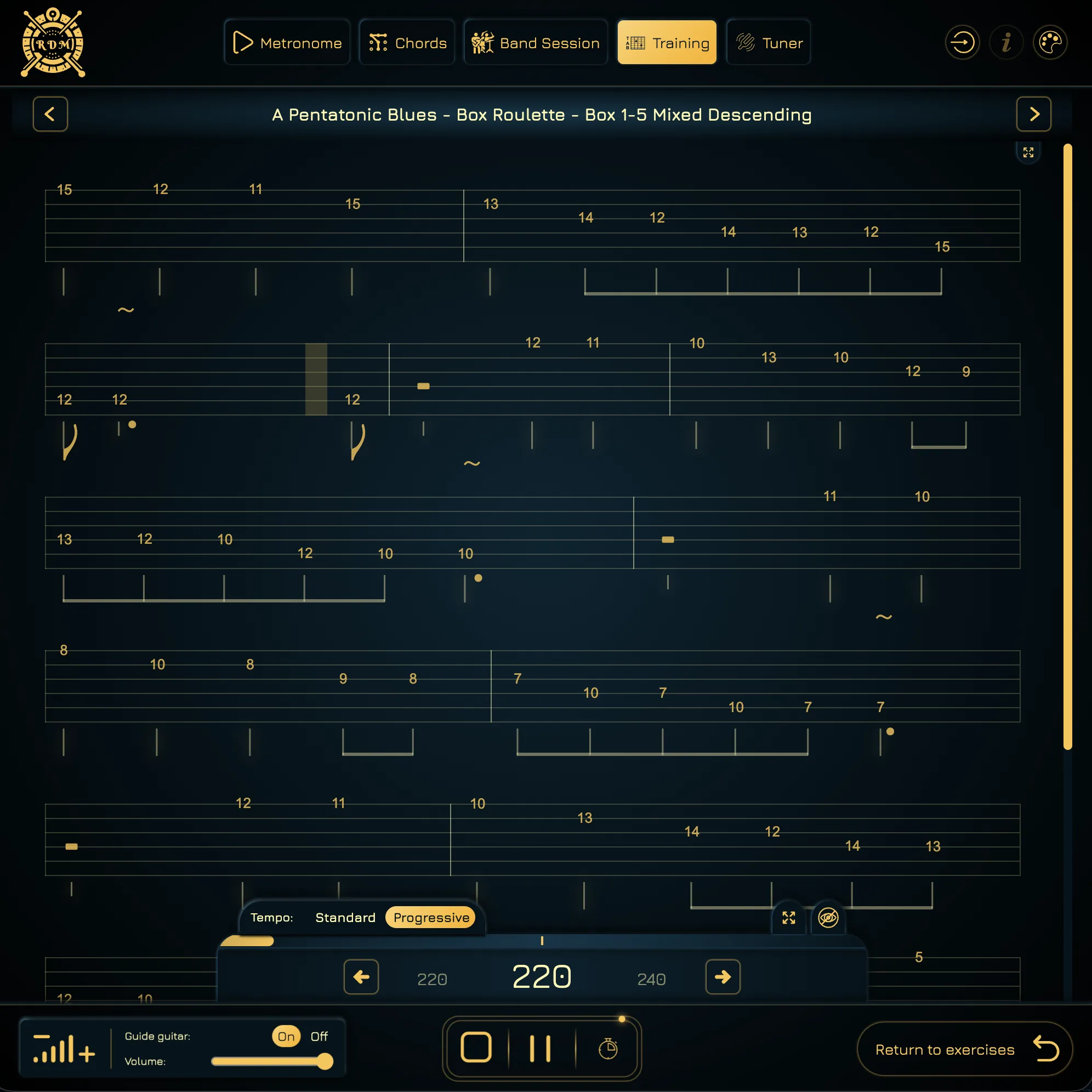
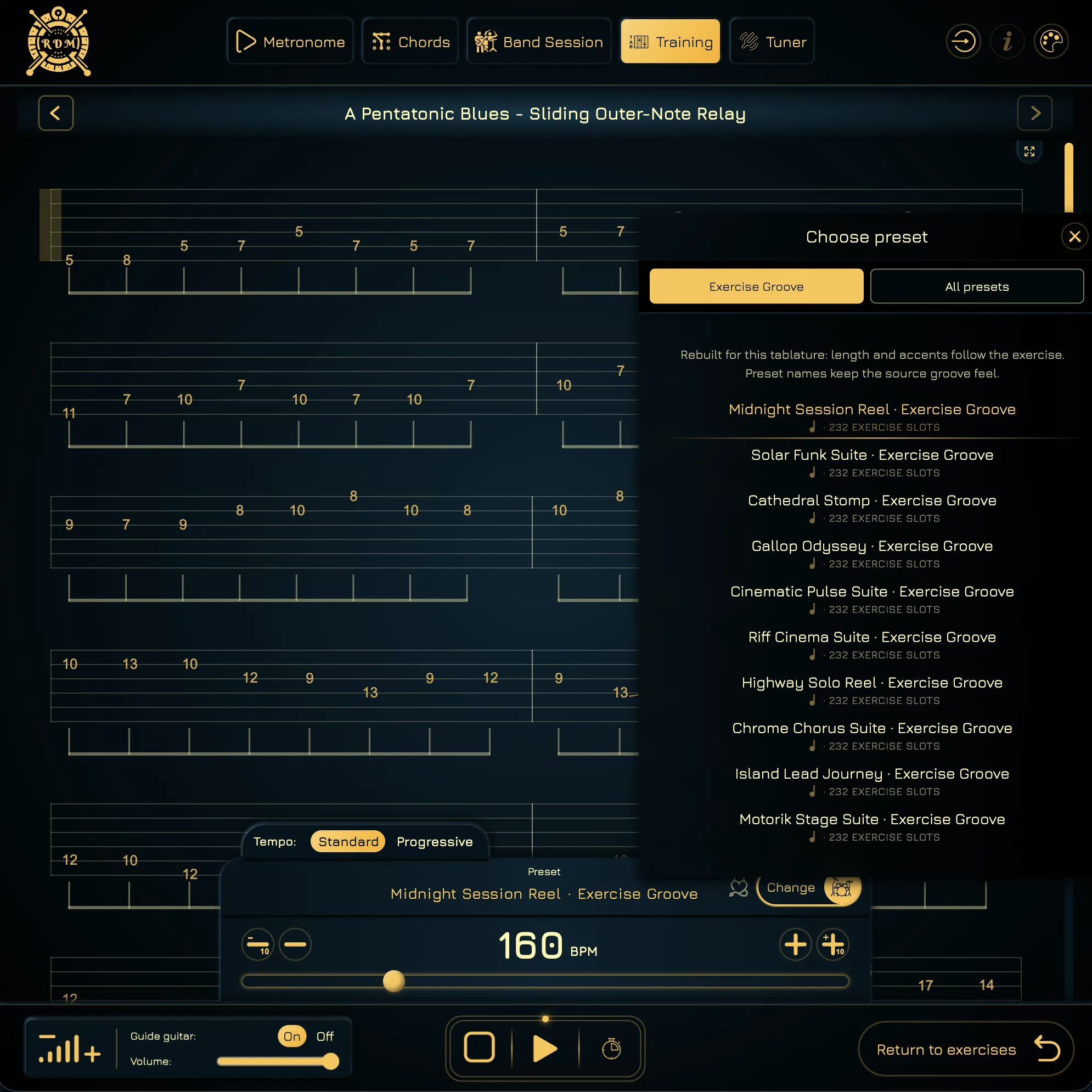
Use Exercise Groove for presets rebuilt to match the tablature length and accents, so the backing stays with the phrase instead of distracting you. Prefer your own feel? Switch to All presets and choose any groove.
Pick the root, scale family, or mode that matters for your playing right now.
See its notes and positions across the fretboard before asking your hands to memorize the movement.
Open a guided tab that matches your level, then progress to wider shifts and more demanding sequences.
Use a preset adapted to the exact tab, or pick your own, and repeat the exercise at a controlled standard or progressive tempo.
Everything needed for useful scale practice stays in one flow: the notes, the exercise, the tab, the tempo, and a backing groove that makes repetition worth hearing.
Choose pentatonics, major and minor families, modes, and their roots from one clear selector.
Understand how the scale connects across the fretboard instead of getting trapped in one isolated box.
Move from approachable patterns to shifts, sequences, and coordination challenges that make the scale usable.
Always know which note comes next while the tab, rhythm, and tempo stay visible together.
Use grooves rebuilt around the tab length and accents, so the backing supports the exercise instead of fighting it.
Open All presets whenever you want a different feel and practice the same tab with any available groove.
Stop collecting scale charts. Pick the scale you need, open an exercise at the right level, and play it with a groove until the notes and movement belong under your fingers.